With the improvement of environmental protection and public health awareness, PFAS (per- and polyfluoroalkyl substances) have become the focus of global attention. PFAS is a class of artificial chemicals with extremely strong chemical stability, widely used in waterproofing, oil repellent, antifouling and other fields. However, PFAS is difficult to degrade in the environment and has potential hazards to human health and the ecological environment.
For this reason, countries have introduced regulations on PFAS. While complying with these regulations, companies are also facing huge compliance pressure. Here we will introduce you to the latest global PFAS regulations, uses and corporate response strategies.
PFAS definition
PFAS (Per- and Polyfluoroalkyl Substances) refers to a class of synthetic chemicals with perfluorocarbon chains. Because the fluorine-carbon bond is extremely strong, these chemicals are almost not easily degraded in the natural environment, so they are given the nickname of "permanent chemicals". It includes thousands of different chemicals, mainly including the following:
Perfluoroalkyl compounds (PFAAs): perfluorooctane sulfonic acid (PFOS), perfluorooctanoic acid (PFOA)
Perfluoroolefins (PFASs): perfluoroolefins (PFHxS)
Fluorinated surfactants
Polymer PFAS: fluorinated polymers, polytetrafluoroethylene (PTFE)
Other common PFAS substances: PFDA (perfluorodecanoic acid), PFUnA (perfluoroundecanoic acid), PFTrA (perfluorotriacontadecanoic acid)
Their common feature is the structure of the fluorinated carbon chain, which makes them uniquely resistant to water, oil, high temperature, and corrosion.
EU
The EU is increasingly stringent in its regulation of PFAS. In 2024, the EU is expected to further restrict the use of PFAS in consumer products, especially in food packaging, children's toysand other fields. In addition, the EU has passed the Registration, Evaluation, Authorization and Restriction of Chemicals (REACH), requiring companies to register PFAS ingredients in their products and submit relevant risk assessment reports.
United States
The U.S. Environmental Protection Agency (EPA) released a preliminary risk assessment on PFAS in 2021 and plans to strengthen the regulation of PFAS pollution. The United States is promoting the inclusion of PFAS as a "controlled substance" in the management scope of the Toxic Substances Control Act (TSCA). This means that companies that produce and use PFAS will face stricter supervision in the future.
On September 5, 2024, the U.S. Environmental Protection Agency (EPA) issued a direct final rule to postpone the reporting date for per- and polyfluoroalkyl substances (PFAS) under Section 8(a)(7) of the Toxic Substances Control Act (TSCA).
On September 29, 2024, the Governor of California signed AB 347 to implement the PFAS ban in certain products.
AB-347 Household product safety: toxic substances: testing and enforcement. (Prohibits the sale, sale, or provision of products, textiles, and food packaging containing certain levels of perfluoroalkyl and polyfluoroalkyl substances to minors in the country)
Canada
Environment and Climate Change Canada (ECCC) has also strengthened the regulation of PFAS. As early as 2021, the Canadian government proposed a management framework for PFAS, requiring detailed records of products containing PFAS. Canada has included PFAS in the list of restricted chemicals and restricted its use in consumer products, especially in daily consumer products such as waterproof and oil-proof.
On July 27, 2024, the Canadian Ministry of Environment published a notice in the Canada Gazette, requiring the collection of information on the manufacture, import and use of 312 specific perfluorinated and polyfluoroalkyl substances (PFAS) as individual substances, mixtures, products or articles in the 2023 calendar year.
China
China is also gradually strengthening its supervision of PFAS. In recent years, with the implementation of environmental protection policies and attention to environmental pollution issues, China has begun to conduct risk assessments on PFAS substances and has issued some preliminary environmental protection standards. In 2023, China's environmental protection department proposed comprehensive monitoring requirements for PFAS compounds and controlled some high-risk PFAS components.
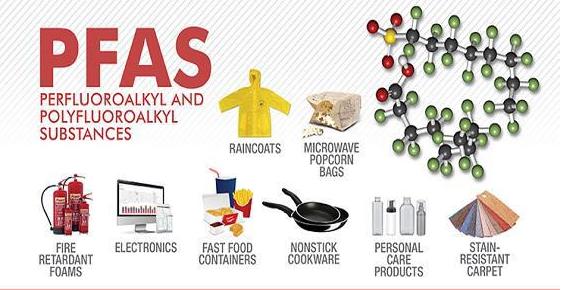
PFAS is used in electrical and electronic products as insulation materials for wires and cables, coatings for electronic components, and other parts that require high temperature and corrosion resistance. Due to its excellent high temperature resistance, PFAS is widely used in the electronics industry, especially in equipment that needs to run for a long time and has a relatively harsh working environment.
The use of PFAS in electronic products is monitored by regulations in many countries. Environmental regulations in the United States and Europe require that electronic products avoid the use of harmful PFAS chemicals as much as possible during manufacturing, and gradually promote the development and application of harmless alternatives.
PFAS is widely used in toys and children's products, mainly as waterproof, anti-fouling or oil-proof coatings. They can help improve the durability and easy cleaning of products. Although these products are very attractive to children, some studies have shown that long-term exposure to PFAS may have adverse effects on children's health, so the use of PFAS in toys has been gradually strengthened worldwide.
Countries have strict regulations on the content of PFAS in toys and children's products. For example, the EN 71-9 standard specifically stipulates restrictions on harmful chemicals that may be contained in toys, including specific limit requirements for certain PFAS. In addition, the United States, Canada and other countries have similar regulations.
Stationery and educational supplies
In some stationery and educational supplies, especially on waterproof, oil-proof or anti-fouling coatings. For example, some waterproof pens, markers and high-quality paper may contain PFAS ingredients. These stationery products can effectively extend the service life of the product, but they also bring potential environmental risks.
Although the management of PFAS content in stationery and educational supplies is not as strict as toys, some countries (such as the European Union) have begun to pay attention to this issue. According to the EU Chemicals Regulation REACH, some stationery products containing harmful chemicals have been included in the banned or restricted list.
Food contact materials
In food packaging materials, especially in food contact materials such as takeaway packaging, paper cups, and paper plates, it is used to improve its oil and water resistance. The residues of these chemicals may enter the food through the packaging materials, and long-term accumulation may pose a threat to human health. Therefore, many countries and regions have particularly strict supervision on the content of PFAS in food contact materials.
For example, the US Food and Drug Administration (FDA) has gradually strengthened the control of PFAS in food packaging, and the TPCH packaging directive also controls it. The European Union also has similar regulations requiring restrictions on the residues of specific PFAS compounds in food contact materials.
As the regulation of PFAS becomes more stringent, companies should not only rely on compliance when dealing with relevant regulations, but should also promote sustainable business development through innovation and the application of environmental protection technologies.
Only by actively responding to government policies, adopting environmentally friendly alternatives, and improving internal control systems can we be invincible in future competition. Faced with the global trend of PFAS governance, companies should make early arrangements, do a good job of compliance and risk management in advance, and seize the market opportunities of green environmental protection.
With its excellent technical capabilities, HUAK Testing Laboratory can provide PFAS testing and compliance support to enterprises, helping them to move forward steadily in the severe market regulatory environment.
If you need to know more about PFAS testing or other test services, please feel free to contact us.
HUAK Testing Certification Service Advantages
HUAK Testing covers an area of over 4,000 square meters, including EMC, RF, 5G NR/6G (RF), Safety, Physical, Battery, and Chemical testing laboratories. It supports a wide range of products—from consumer goods like mobile phones, computers, toys, apparel, footwear, and cosmetics, to industrial control equipment and smart home devices—helping clients meet global market access requirements. The company is equipped with internationally advanced professional testing equipment and has assembled an elite team of senior industry experts and technical professionals. Team members, with their solid professional knowledge and rich practical experience, are able to accurately interpret various complex standards and technical requirements. As a well-known third-party testing laboratory in China, HUAK has been recognized by many international organizations, including the China National Accreditation Service(CNAS) for Conformity Assessment and the US A2LA. HUAK Testing is also the designated testing and certification service provider for Amazon, and maintains close cooperation with internationally renowned notified bodies such as MICOM, element, MET, and Germany's PHOENIXTESTLAB GmbH.


 English
 日本語
日本語 français
 Deutsch
 Español
 italiano
 русский
 português
 العربية
 Türkçe
 dansk
dansk