For cross border sellers, the US children’s product market offers huge potential yet comes with stringent compliance requirements. Among them, CPC certification is an indispensable threshold. To smoothly bring toys and related articles intended for children aged 12 and under into the US market, it is critical to understand and complete CPC certification.
CPC stands for Children's Product Certificate. It is a certificate of conformity issued by manufacturers or importers to verify that products comply with US CPSC safety standards.
Here is the relevant authority: CPSC CPSC stands for Consumer Product Safety Commission. It is an independent federal agency of the United States established in 1972, with the mission to protect consumers from injuries caused by unsafe consumer goods.
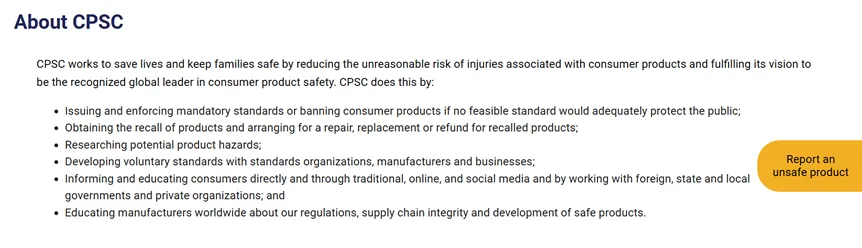
CPSC regulates a wide range of consumer goods including toys, children’s products, household appliances and furniture. Its core responsibilities are as follows:
1. Establish and enforce safety standards: Set safety requirements for various consumer goods, which enterprises must follow for legal sales in the US.
2. Market surveillance: Conduct sampling inspections and oversight over products sold on the market to ensure compliance.
3. Incident investigation and product recall: Mandate product recalls when non compliant goods pose potential safety hazards.
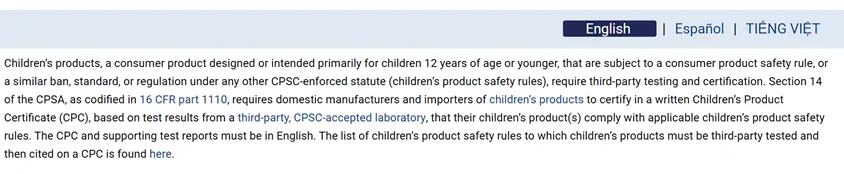
CPC applies to products designed for, or primarily used by children aged 12 and under, such as children’s toys, apparel, school supplies and more.
Section 14 of the Children’s Product Safety Act, codified in Title 16, Part 1110 of the Code of Federal Regulations, requires domestic children’s product manufacturers and importers to issue a written Children’s Product Certificate (CPC) based on test results from a CPSC accepted third party laboratory. The certificate shall demonstrate that the children’s product meets applicable children’s product safety rules.
Both the CPC and its supporting test report must be in English. The CPC shall list all children’s product safety rules for which third party testing of the children’s product was performed.
In short: CPSC is the regulatory authority; CPC is the compliance document.
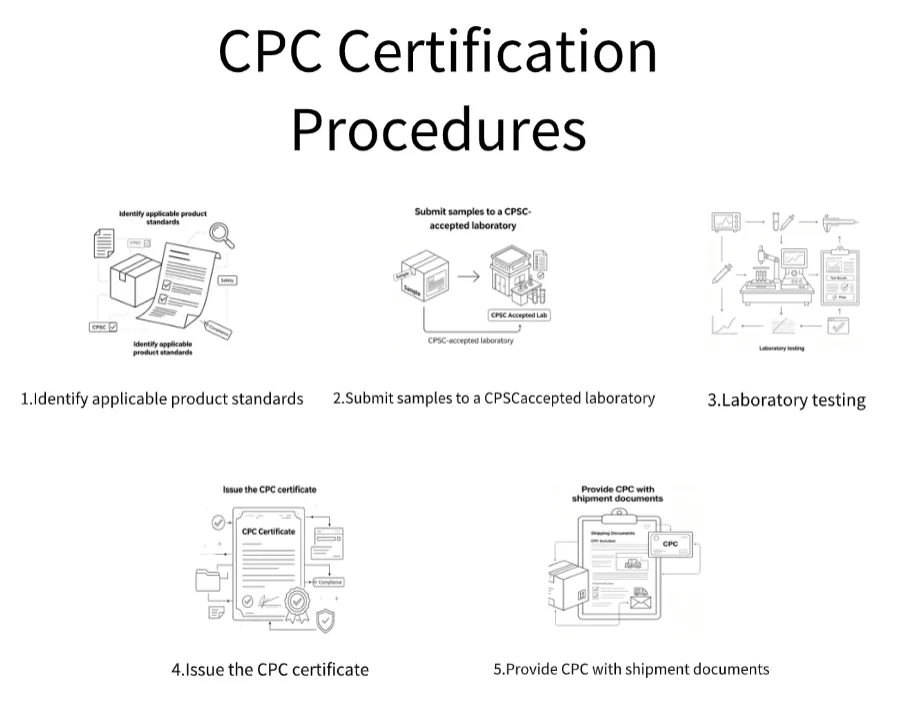
1. Identify applicable product standards Different children’s products are subject to distinct test standards:
· Infant toys: ASTM F963, focusing on small part choking hazards, lead / cadmium content, etc.
· Baby bottles & nipples: FDA 21 CFR, covering food contact safety, BPA free requirements, etc.
· Children’s garments: 16 CFR 1610, for flammability performance, formaldehyde content, etc.
· Cribs: ASTM F1169, covering structural safety, slat spacing, etc.
2. Submit samples to a CPSC accepted laboratory Testing must be performed by a third party laboratory officially recognized by CPSC.
3. Laboratory testing Typical test items include:
· Physical & mechanical hazards: small parts, sharp points, etc.
· Chemical hazardous substances: lead, phthalates, etc.
· Label compliance: warning statements, tracking labels, etc.
4. Issue the CPC certificate Manufacturers or importers issue the CPC on their own based on favourable test reports. No government approval is required. The certificate template shall include product information (name, model number), applicable regulations (e.g. ASTM F963), laboratory name, test date, and compliance statement.
5. Provide CPC with shipment documents Include the CPC among shipping documents for export. Customs or Amazon may conduct random audits.
CPC certification refers to issuing a written Children’s Product Certificate whereby manufacturers, importers or private label vendors certify that their children’s product complies with all applicable children’s product safety rules.
Children’s product certification must be supported by passing test results from a CPSC accepted third party laboratory. Third party test labs deliver testing services and reports but do not issue the CPC. Manufacturers, importers or private label owners are responsible for preparing and issuing the CPC.
Domestic manufacturers or importers (for overseas manufactured goods) shall prepare and issue the CPC based on passing test data from a CPSC accepted third party laboratory. Where an importer issues the certificate, the importer does not need to be located within the United States nor list a US address to satisfy CPC element 3 and/or 4.
Domestic manufacturers or importers of children’s products subject to children’s product safety rules or other standards bear legal responsibility for issuing the CPC, even if third party labs or other third parties assist in drafting the document.
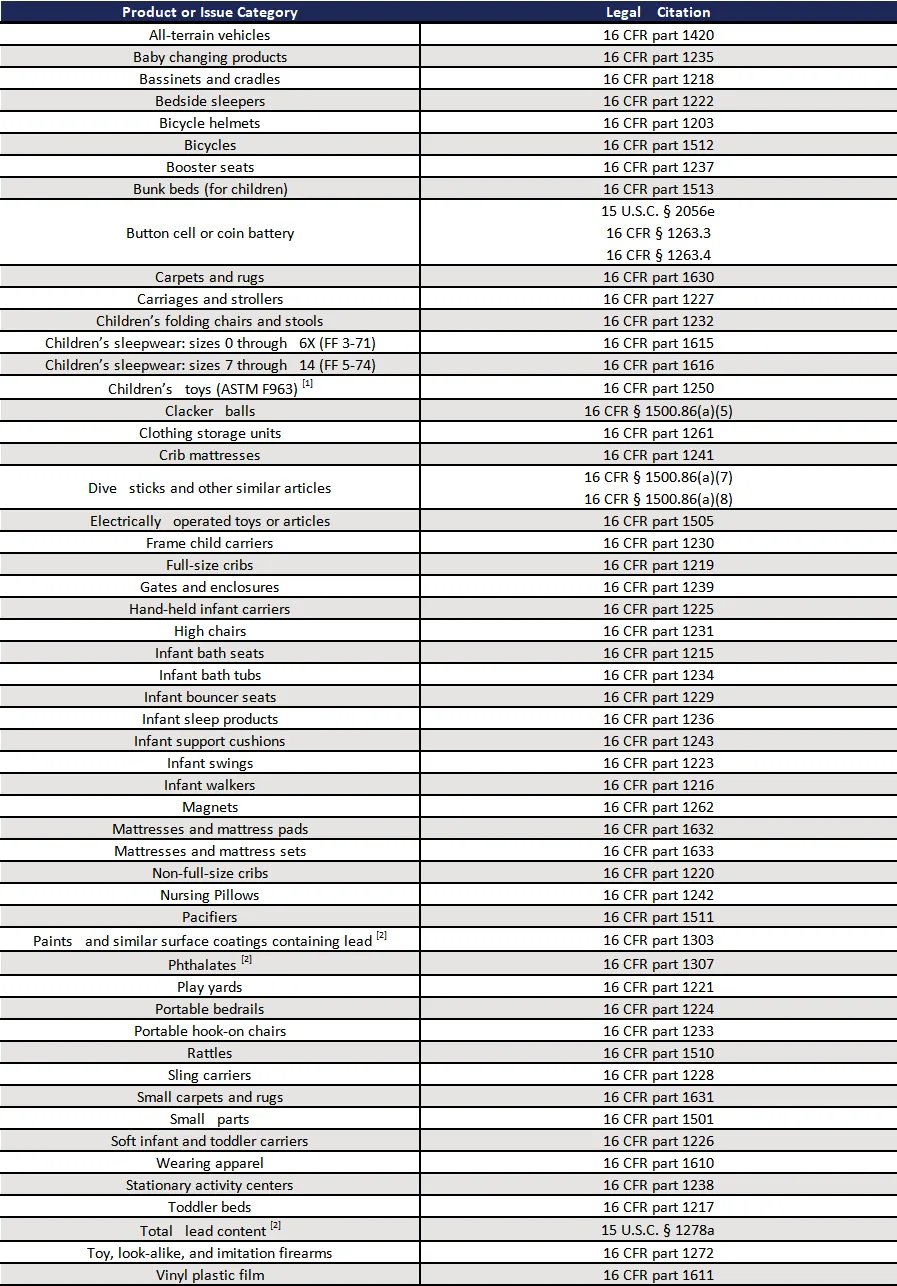
(CPSC product categories and corresponding regulatory standards)
Yes. It is a mandatory requirement under US federal law. Products without valid certification cannot be sold in the US market. Non compliant goods may face recalls and penalties.


 English
 日本語
日本語 français
 Deutsch
 Español
 italiano
 русский
 português
 العربية
 Türkçe
 dansk
dansk