
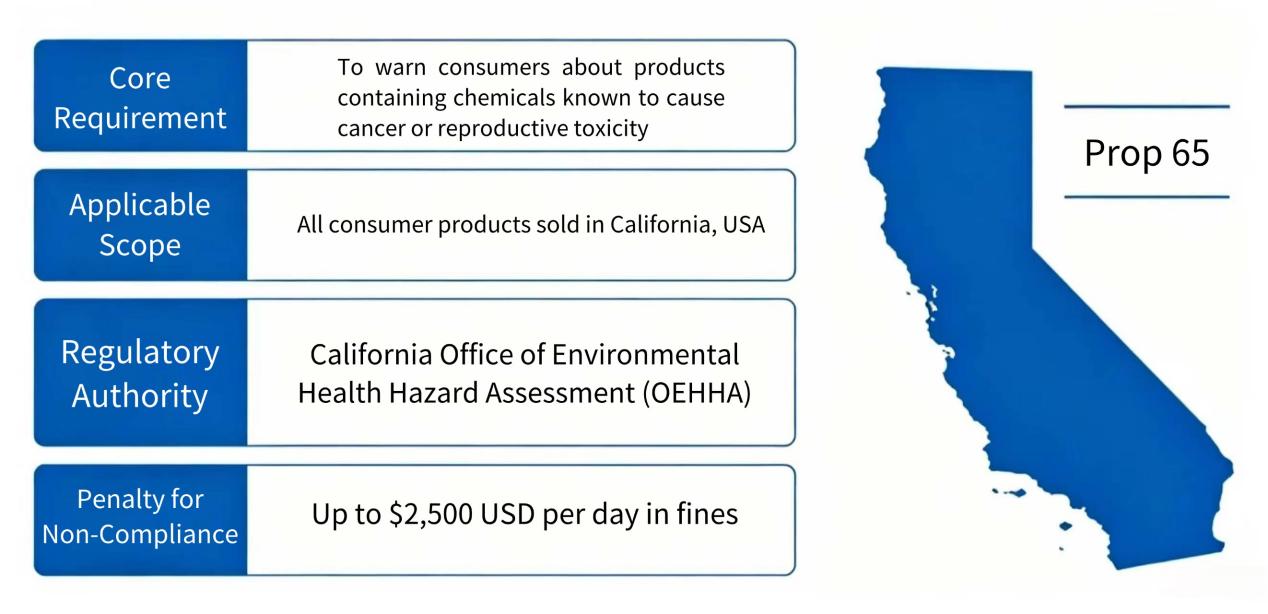
1. Waste Discharge Ban:Deliberate release of listed carcinogenic and reproductive toxic substances into drinking water,surface water and surrounding soil is prohibited.
2. Mandatory Warning:Clear compliant warning labels must be posted if products or workplace may expose people to listed chemicals.Exemption is allowed only when exposure stays below safety thresholds.
3. Chemical List:Over 900 chemicals covered and updated annually.Warnings shall be completed within 12 months after listing;a 20-month transition period applies to discharge restrictions.
4. Liable Parties:Full supply chain including manufacturers,importers,distributors and retailers bear liabilities,with manufacturers taking primary responsibility.
1. Official Authorities:California Attorney General,district attorneys and city attorneys of cities with population over 750,000 are entitled to file lawsuits directly.
2. Civil Parties & Law Firms:Individuals,NGOs and legal firms can launch litigations after issuing a 60-day notice.Formal lawsuits can be filed if no official intervention within the period.
3. Reverse Burden of Proof:Plaintiffs only need to prove prohibited substance presence and missing warnings.Enterprises shall prove exposure compliance for exemption,no actual harm evidence required.
1. Maximum Statutory Fine:Up to $2,500 per violation per day.Fines accumulate with prolonged non-compliance.
2. Court Mandates:Court orders may require sales suspension,product recall,label revision and permanent violation cessation.
3. Settlement Expense:Most cases end with out-of-court settlement.Average settlement fee reaches around $65,000 per case;mass violations may cost millions.
4. Additional Compensation:Losing parties shall cover the plaintiff's legal and court fees.
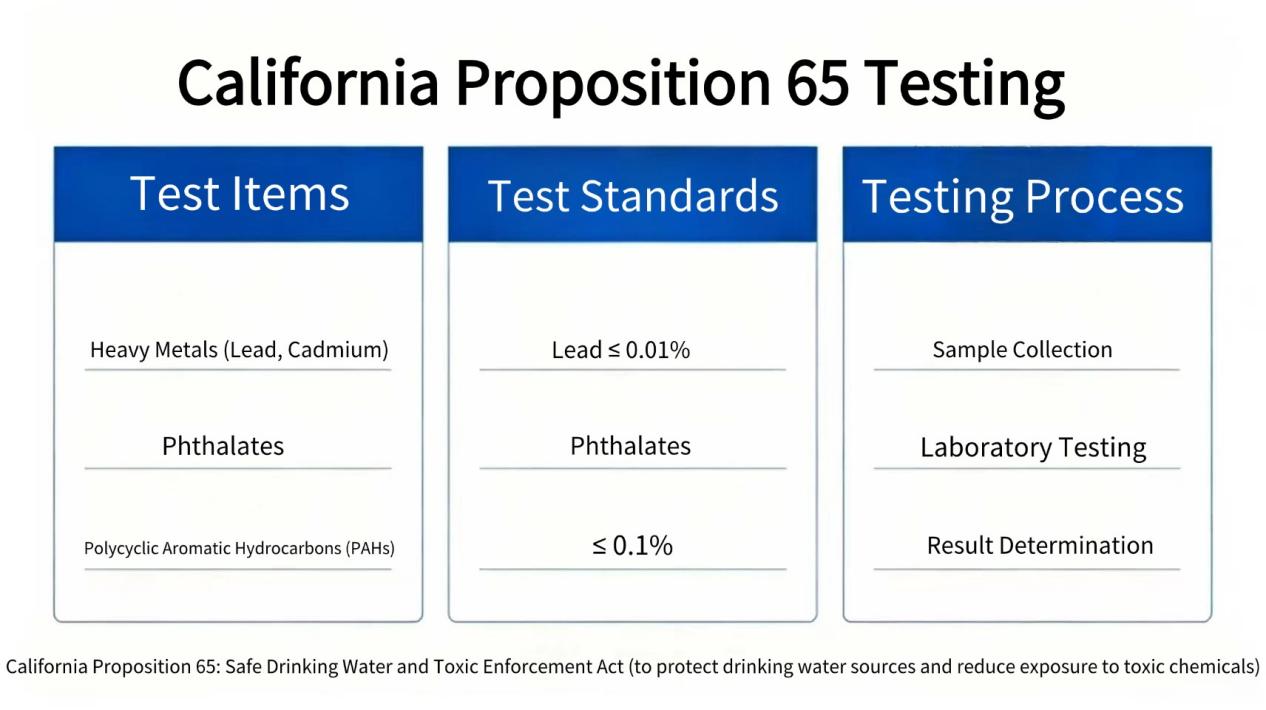
1. Unlabeled products containing lead,cadmium,phthalates,BPA,BPS,formaldehyde and other restricted substances
2. Non-compliant warning text,format and placement
3. Failure to conduct risk assessment and attach warnings under high exposure risks
4. Restricted chemical leakage into water sources during production and discharge
1. Halt sales of involved products and assess substance content and exposure risks
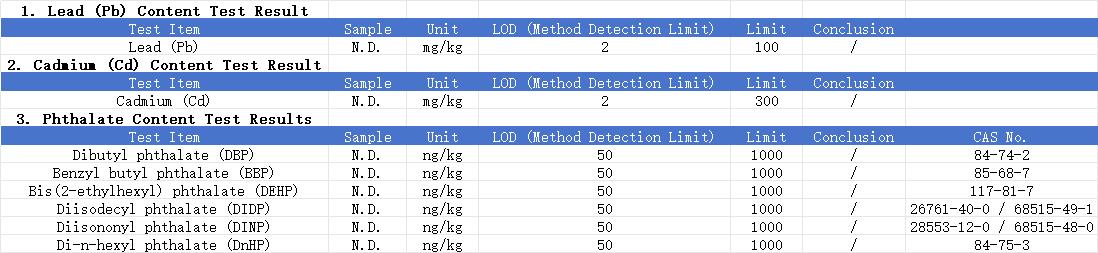
2. Conduct Prop 65 testing and risk assessment,apply exemption or add standard warnings
3. Settle disputes within 60 days to avoid accumulated daily fines after lawsuit filing
4. Establish regular material screening and re-testing mechanism to maintain long-term compliance


 English
 日本語
日本語 français
 Deutsch
 Español
 italiano
 русский
 português
 العربية
 Türkçe
 dansk
dansk