The European Union has formulated different regulations (directives) for various products. For example, toys, low voltage electrical appliances, personal protective equipment, medical devices and other products all have corresponding regulations (directives). EU regulations (directives) lay down essential health and safety requirements for relevant products, as well as market access procedures and conformity assessment processes.
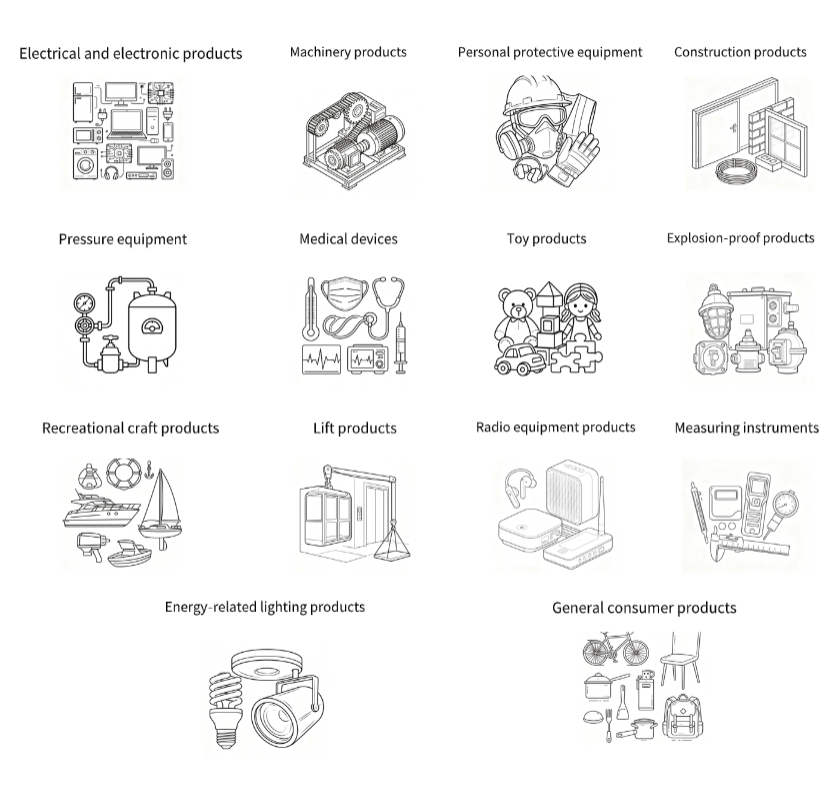
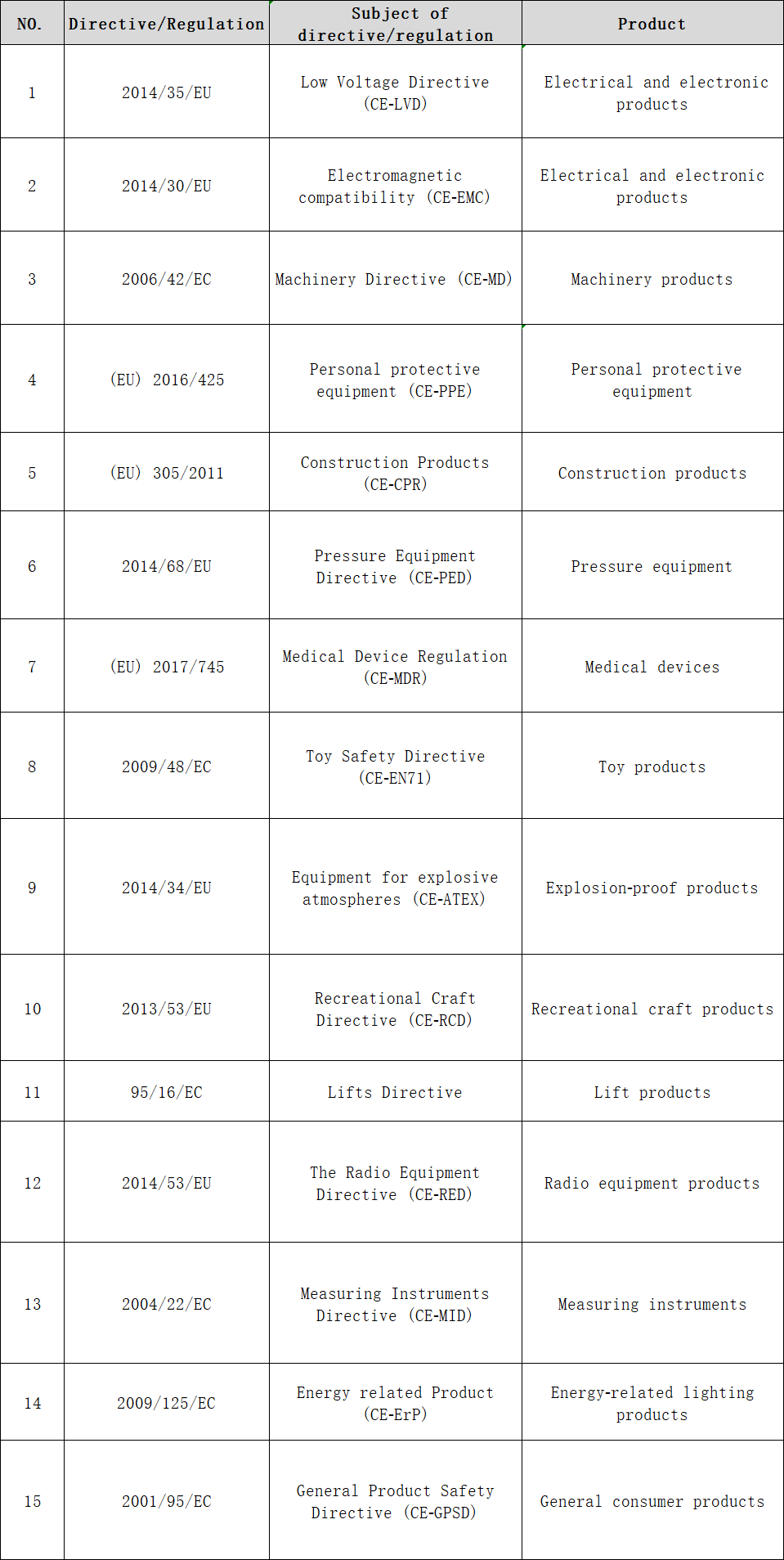
CE certification applies to products complying with standards and regulations for the European Economic Area (EEA). The CE mark is a self declaration mark indicating that products satisfy regulatory requirements of European Union (EU) / EEA member states. Products shall comply with a set of directives and standards to obtain CE certification. Below are common CE certification categories together with relevant CE directives.
Low Voltage Directive (LVD): applies to low voltage electrical and electronic equipment.
Radio Equipment Directive (RED): applies to radio frequency devices such as mobile phones and communication equipment.
It covers electrical and electronic products rated 50 1000 V AC and 75 1500 V DC. Representative products: household appliances, IT equipment, AV equipment, and electrically powered machinery shall comply with CE LVD.
Electromagnetic Compatibility Directive (EMC): sets EMC requirements to ensure equipment neither generates interference nor is affected by external interference.
Applicable to electrical and electronic products with circuit boards that may generate electromagnetic interference. Representative products: household appliances, IT equipment, AV products and 3C digital products shall comply with CE EMC.
Machinery Directive: applies to all kinds of machinery equipment to guarantee product safety.
Pressure Equipment Directive: applies to pressure equipment such as boilers and storage tanks.
Lifts Directive: applies to elevators and lifts.
Covers machinery fitted with power systems. Electric powered machinery shall additionally comply with CE LVD. Representative products: packaging machinery (CE MD); injection molding machines, woodworking machinery, construction machinery (CE MD + LVD).
Personal Protective Equipment Regulation: applies to safety helmets, goggles, protective clothing, etc.
It applies to devices worn or carried by humans for protection against one or more health and safety hazards. Representative products: protective face masks, earplugs, safety helmets shall comply with CE PPE.
Applies to construction materials for building works. Representative products: fire resistant doors, protective door wall assemblies, network cables shall comply with CE CPR.
Covers vessels, piping, safety components and pressure bearing parts with a maximum working pressure above 0.5 bar. Representative product: pressure valves subject to CE PED.
Formerly applied to general medical devices: electrocardiographs, medical face masks, clinical thermometers.
Applies to toy products. Representative products: plush toys, building block toys comply with Toy Safety Directive / EN 71.
For equipment intended for use in potentially explosive atmospheres. Representative product: explosion proof lights with ATEX certification.
Applies to recreational craft products.
Applies to lift products, including elevators, lifts and lifting platforms.
Applies to radio communication equipment and telecommunication terminal equipment. Representative products: Bluetooth earphones, Bluetooth speakers, routers shall comply with CE RED.
Applies to measuring instruments. Representative products: electronic weighing scales, thermometers, laser measuring instruments comply with CE MID.
Applies to energy related electrical and electronic goods. Representative products: energy saving lamps, air conditioners, refrigerators are subject to CE ErP.
Applies to general consumer products. Representative products: outdoor bicycles, furniture, lighters shall comply with CE GPSD.
Benefits of holding CE certification
Legal access to the European market: CE marking is a legal prerequisite for placing products on the European market. CE compliant products can be sold legally within Europe and avoid non compliance risks.
Product quality & safety: CE certification verifies compliance with European regulations and standards and improves overall product quality and safety performance.
Market expansion: Apart from the European market, CE marked products gain easier access to other global markets as proof of regulatory compliance and high quality.
Enhanced competitiveness: CE certified products enjoy stronger market competitiveness by demonstrating compliance and reliable quality.
Risk mitigation: CE assessment and testing help manufacturers reduce liability risks for product caused damage or accidents.
Meet consumer expectations: The CE mark informs consumers of product legality and quality and strengthens consumer trust in products.


 English
 日本語
日本語 français
 Deutsch
 Español
 italiano
 русский
 português
 العربية
 Türkçe
 dansk
dansk