FCC certification is widely known. This document focuses specifically on FCC certification for UWB devices.
FCC certification is a mandatory compliance certification enforced by the United States for electronic, telecommunication and wireless equipment.It primarily regulates products for electromagnetic compatibility (EMC) and radio frequency (RF) safety.All electronic products,especially wireless and communication devices,sold in the US market must comply with FCC technical standards. FCC certification is also required for products targeting Canada and other North American markets. For instance, it is a prerequisite for domestic electronic products sold on Amazon.
Nearly all products with wireless transmitting functions need to obtain FCC certification, including common technologies such as BLE, Zigbee and Wi-Fi. The same rule applies to UWB devices.
FCC certification falls into two categories: FCC SDoC and FCC ID. FCC SDoC applies to ordinary devices without wireless functions, covering only EMC testing. FCC ID is mandatory for wireless devices, requiring both EMC and RF testing.
The compliance requirements for UWB devices under FCC rules are straightforward, focusing on five core criteria below:
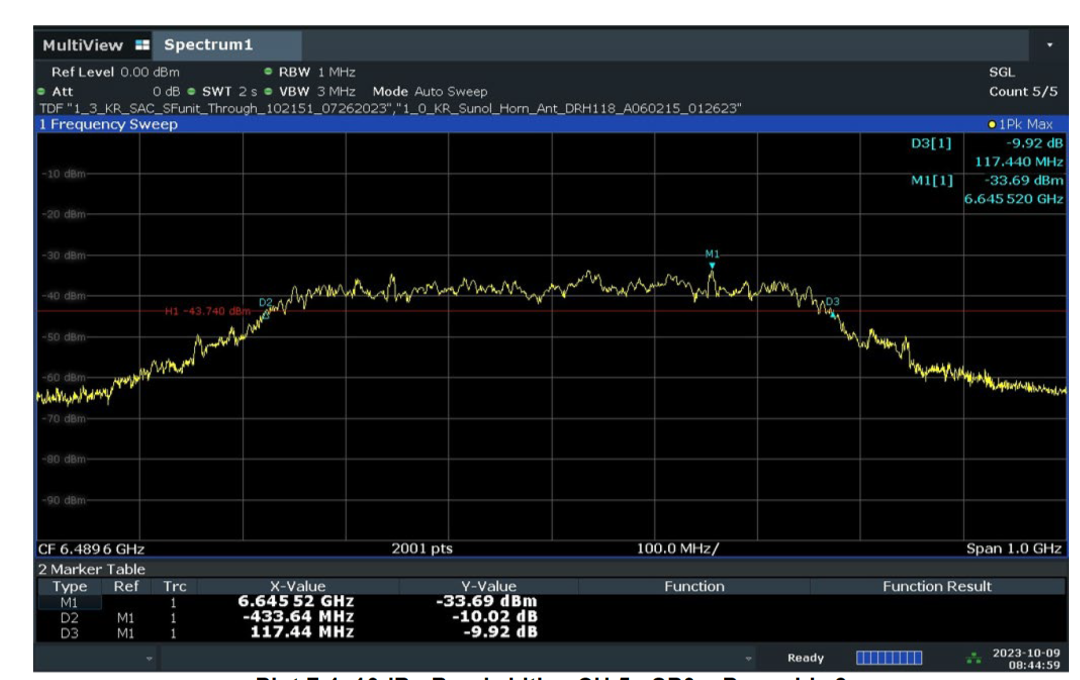
The operating frequency band of UWB devices shall range from 3100 MHz to 10600 MHz. The 10 dB bandwidth must lie within this range and shall be no less than 500 MHz. The test result of Channel 5 of a UWB device is shown in the figure below.
For UWB handheld devices, the transmitter must receive an acknowledgment (ACK) signal from the receiver within 10 seconds. Transmission shall be terminated automatically if no ACK is received.
FCC imposes dual limits on UWB radio emission:
Peak Power: The peak EIRP shall not exceed 0 dBm per 50 MHz, i.e. EIRP < 0 dBm/50MHz. Since most spectrum analyzers cannot be set to a resolution bandwidth (RBW) of 50 MHz, an equivalent conversion formula is provided (taking 3 MHz RBW as an example): EIRP(3 MHz Limit)=EIRP(50 MHz Limit)+20log(50 MHz3 MHz)
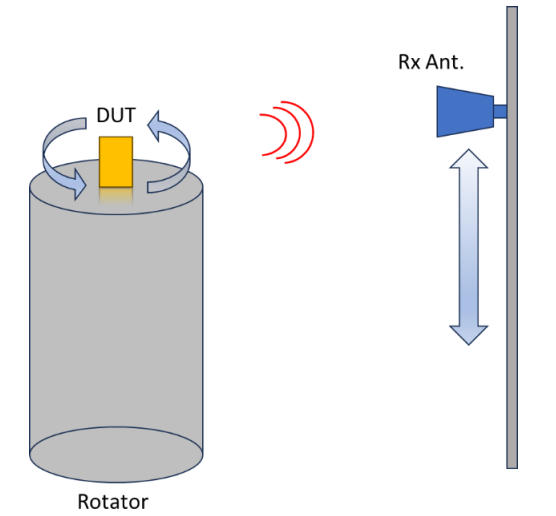
Average Power:The average EIRP shall not exceed -41.3 dBm per 1 MHz,i.e. EIRP < -41.3 dBm/MHz.Relevant test diagram is shown below.
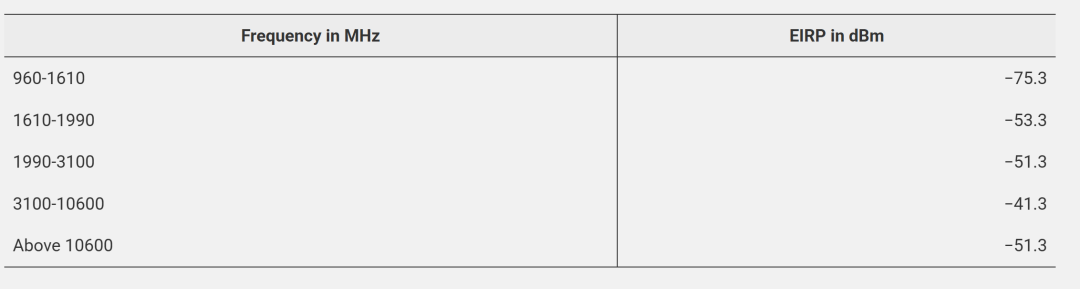
FCC specifies limits for out-of-band spurious emissions across different frequency bands, as illustrated in the figure below.

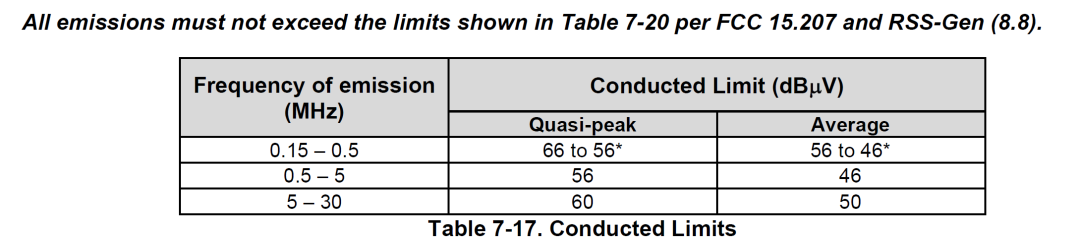
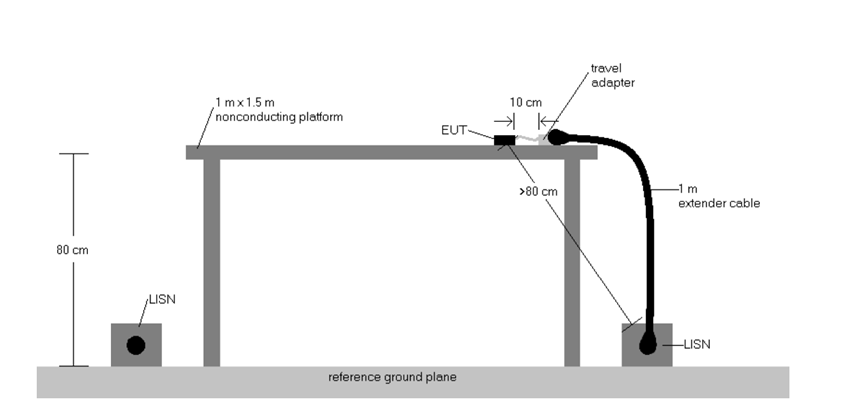
This is a standard EMC test, designed to restrict RF spurious signals (such as clock harmonics,switching noise and RF crosstalk) conducted through power lines.The test frequency range is 150 kHz ~ 30 MHz,with specified limits for both peak and average values.
The schematic diagram for this test setup is as follows:
HUAK Testing Certification Service Advantages
HUAK Testing covers an area of over 4,000 square meters, including EMC, RF, 5G NR/6G (RF), Safety, Physical, Battery, and Chemical testing laboratories. It supports a wide range of products—from consumer goods like mobile phones, computers, toys, apparel, footwear, and cosmetics, to industrial control equipment and smart home devices—helping clients meet global market access requirements. The company is equipped with internationally advanced professional testing equipment and has assembled an elite team of senior industry experts and technical professionals. Team members, with their solid professional knowledge and rich practical experience, are able to accurately interpret various complex standards and technical requirements. As a well-known third-party testing laboratory in China, HUAK has been recognized by many international organizations, including the China National Accreditation Service(CNAS) for Conformity Assessment and the US A2LA. HUAK Testing is also the designated testing and certification service provider for Amazon, and maintains close cooperation with internationally renowned notified bodies such as MICOM, element, MET, and Germany's PHOENIXTESTLAB GmbH.


 English
 日本語
日本語 français
 Deutsch
 Español
 italiano
 русский
 português
 العربية
 Türkçe
 dansk
dansk